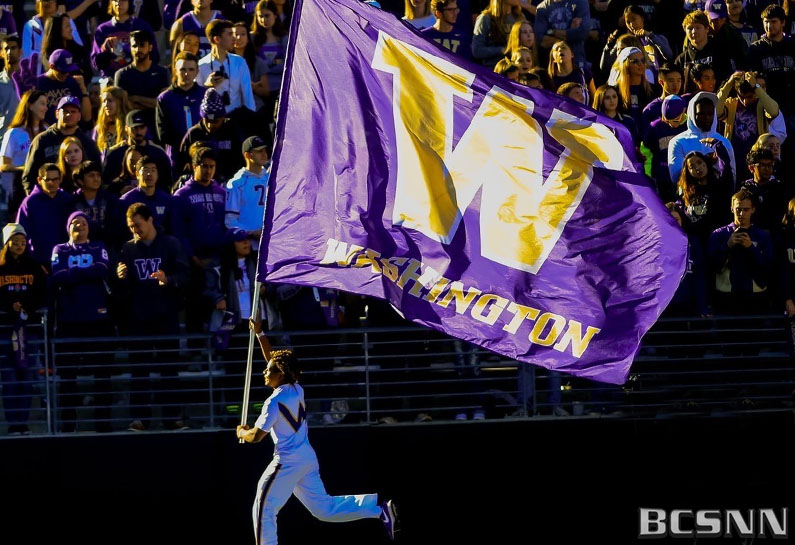
(BCSNN | UPI) Washington’s quarterback situation went from stable to chaotic in a matter of days - and the ripple effects could reach far beyond Seattle.
Sophomore quarterback Demond Williams Jr. announced Tuesday night on social media that he is entering the transfer portal, writing, “I have to do what is best for me and my future.” The move comes just days after he agreed to return to Washington for the 2026 season and signed a contract to do so.
The sudden reversal has raised immediate questions about roster stability, contract enforceability, and whether college football is entering a new era of uncertainty - one where even signed agreements and major financial commitments may not be enough to keep rosters intact.
Washington reportedly intends to pursue all legal avenues to enforce Williams’ signed contract. The situation has also drawn the attention of the Big Ten, which was vocal last year when Wisconsin attempted to enforce defensive back Xavier Lucas’ contract after his controversial transfer to Miami.
Williams’ departure is particularly jarring given his production. He completed 69.5% of his passes for 3,065 yards, with 25 touchdowns and eight interceptions, while adding 611 rushing yards and six scores. He earned All‑Big Ten honorable mention and threw four touchdown passes in the LA Bowl - the second straight postseason in which he accomplished that feat.
For Washington, the timing is brutal. For college football, the implications may be even bigger.
Programs are investing heavily in retention deals, NIL‑based contracts, and long‑term roster planning. But Williams’ decision - signing a contract, accepting its terms, and then entering the portal days later - underscores a growing concern: schools may no longer have any reliable mechanism to secure their own players, even when agreements are in place.
The sport is now watching closely. Conferences are stepping in. Legal teams are preparing. And coaches across the country are wondering whether this is the new normal - a landscape where contracts are signed, money changes hands, and players still leave.
Williams’ move may become a defining test case for what college football’s contract era really means - and whether the system can hold together under the weight of its own contradictions.