

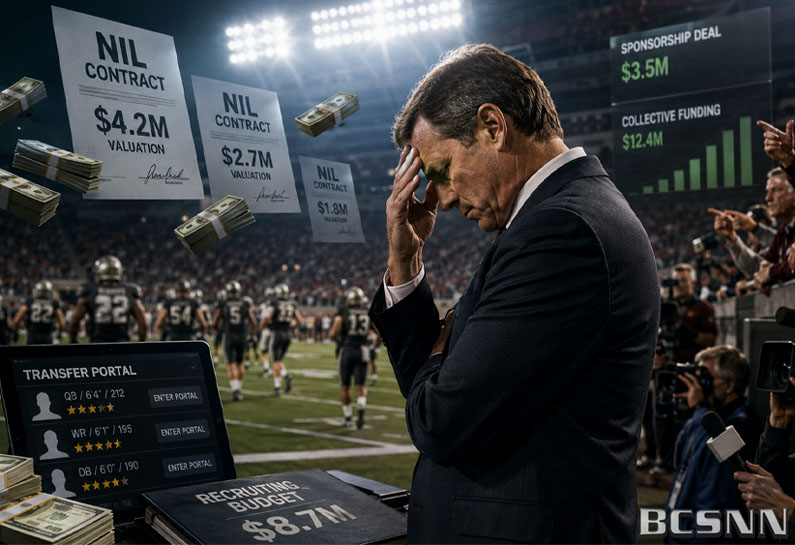
(BCSNN | UPI) -- In the ever‑shifting world of college football, job security for head coaches can disappear almost as quickly as it arrives. Paul Finebaum, one of the most respected analysts in college football (and frequent SEC homer), recently underscored just how unstable these high‑stakes positions have become.
Even with massive buyout clauses that appear to offer protection, coaches may not be as insulated as they expect. Those financial safeguards don’t always guarantee a coach’s place on the sideline, especially when losses pile up.
Head coaches face relentless pressure from fans, alumni and university leadership - who all wants wins for their own personal (and business for the admins) reasons. Notching dubs is only part of the job; they must also maintain clean programs, recruit top talent and help generate revenue. The role remains highly coveted, but it is just as easy to lose.
Large buyout clauses were designed to give coaches (that might otherwise not want to leave a safe job) peace of mind, ensuring a significant payout if they were dismissed early. But Finebaum notes that even the biggest buyouts can’t save a coach when a program struggles. The urge to make a change often outweighs concerns about cost. We've all seen it, with the SEC doling out fat severance checks regularly. From Jimbo Fisher at Texas A&M, to Gus Malzahn at Auburn, to recent firings like Brian Kelly at LSU and Billy Napier at Florida - a hefty buyout definitely does not mean safety for a head coach in the SEC.
Coaching changes carry major financial implications. Schools must weigh the expense of firing a coach against the potential benefits of hiring a new one. Ticket sales, merchandise revenue and alumni donations can all shift dramatically based on on‑field performance.
Most athletic departments have limited financial flexibility, making large buyouts difficult to absorb. Still, the hope that a new coach can revive a program sometimes makes the risk seem worthwhile, even if the gamble is hard to justify.
Finebaum’s comments, along with these high‑profile firings, raise questions about the future of buyout clauses and the business of college football in general. Universities must balance the demand for results with the financial realities of their athletic budgets as the landscape continues to evolve. Or students and boosters can keep absorbing the ever-growing costs associated with these decisions by athletic department personnel. But something has to give.


