

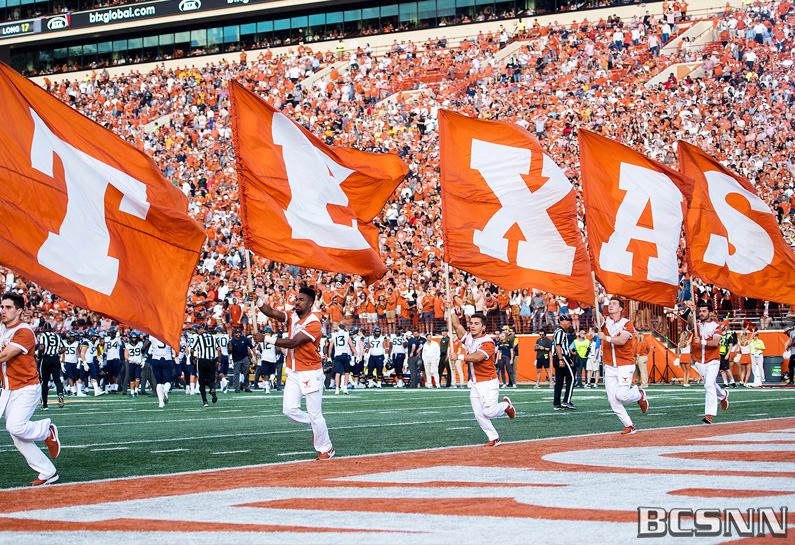
(BCSNN) -- In the age of NIL, the price of building a college football roster has skyrocketed — and two major coaches say the numbers are even more staggering than most fans realize. Texas coach Steve Sarkisian said Thursday that roster spending across his conference has reached levels once thought unimaginable.
“As far as I know, I don’t think there’s a team in our conference that doesn’t pay a minimum $30 million for their roster,” Sarkisian said, per Evan Vieth of Inside Texas. “I think there are some that are close to $50 million.” His comments add fuel to an offseason filled with speculation that the sport’s top programs are now operating with budgets that resemble professional payrolls.
That $50 million figure has circulated for months, and while exact numbers are difficult to verify due to limited reporting requirements, coaches increasingly acknowledge that some teams are approaching — or surpassing — that threshold. New Michigan coach Kyle Whittingham echoed the same estimate earlier this spring, saying the financial arms race has fundamentally reshaped what it takes to compete.
“What it takes to win in college football in this day and age, in this order: great resources in the NIL area and space, outstanding players – which ties right into how much NIL you have – and then, coaching staff that’s competent,” Whittingham told Jake Butt on The Blue Print podcast. “Again, it’s in that order of importance. There’s going to be several teams in this ’27 recruiting cycle that are $50 million-plus rosters. You’ve either got to keep up and embrace that or embrace irrelevance because it’s not changing, at least, right away.
“It’s got to be completely overhauled in the not-too-distant future. You’re already starting to see that with some of the things that are coming down the road.”
Whittingham is far from alone in calling for reform. As the NCAA continues to explore roster changes — including a proposed five‑for‑five eligibility model — the larger concern remains NIL spending. With few guardrails and no spending limits, the gap between the sport’s haves and have‑nots has widened dramatically.
Whittingham suggested that the only sustainable path forward may involve a cap of some kind. “I think they’re trying to rein that in,” he said of eligibility and the transfer portal. “The biggest thing that needs to … have some parameters and guardrails put on it is the NIL, which essentially is a salary cap. That’s the direction we’ve got to head.”
For now, the numbers continue to rise — and so does the sense that college football is on the brink of another major transformation. But with coaches openly discussing solutions, there is growing optimism that the sport may eventually find a more balanced and sustainable model.


